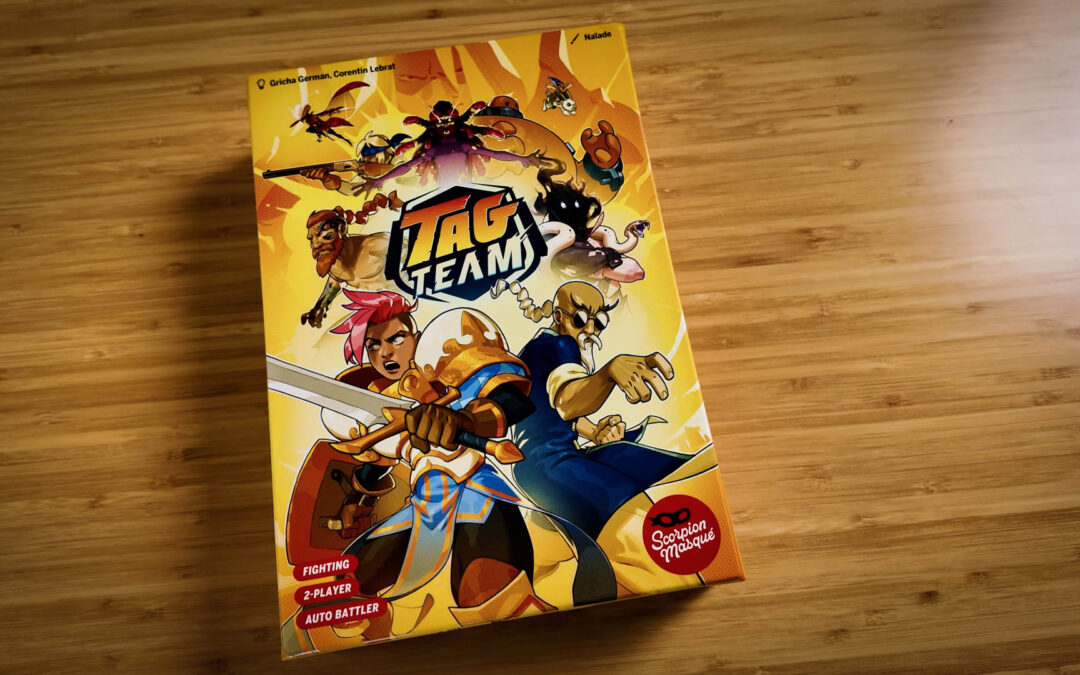
Tag Team Review - This Deck Builder Broke the Rules I Thought I Knew
Review by Lincoln Hoppe: The Game Bard
What is this Tag Team?
What if I told you that in Tag Team, your biggest enemy isn't your opponent or their deck?
It's predicting where they'll put their next card.
This auto-duel just broke the rules I thought I knew about deck building. Let me show you why.
Review copy provided by the publisher. All opinions are my own.
"The system is simple—fight, build, fight and build—yet the combinations of fighters and deck building make it pleasingly strategic and tactical."
MY EXPECTATION
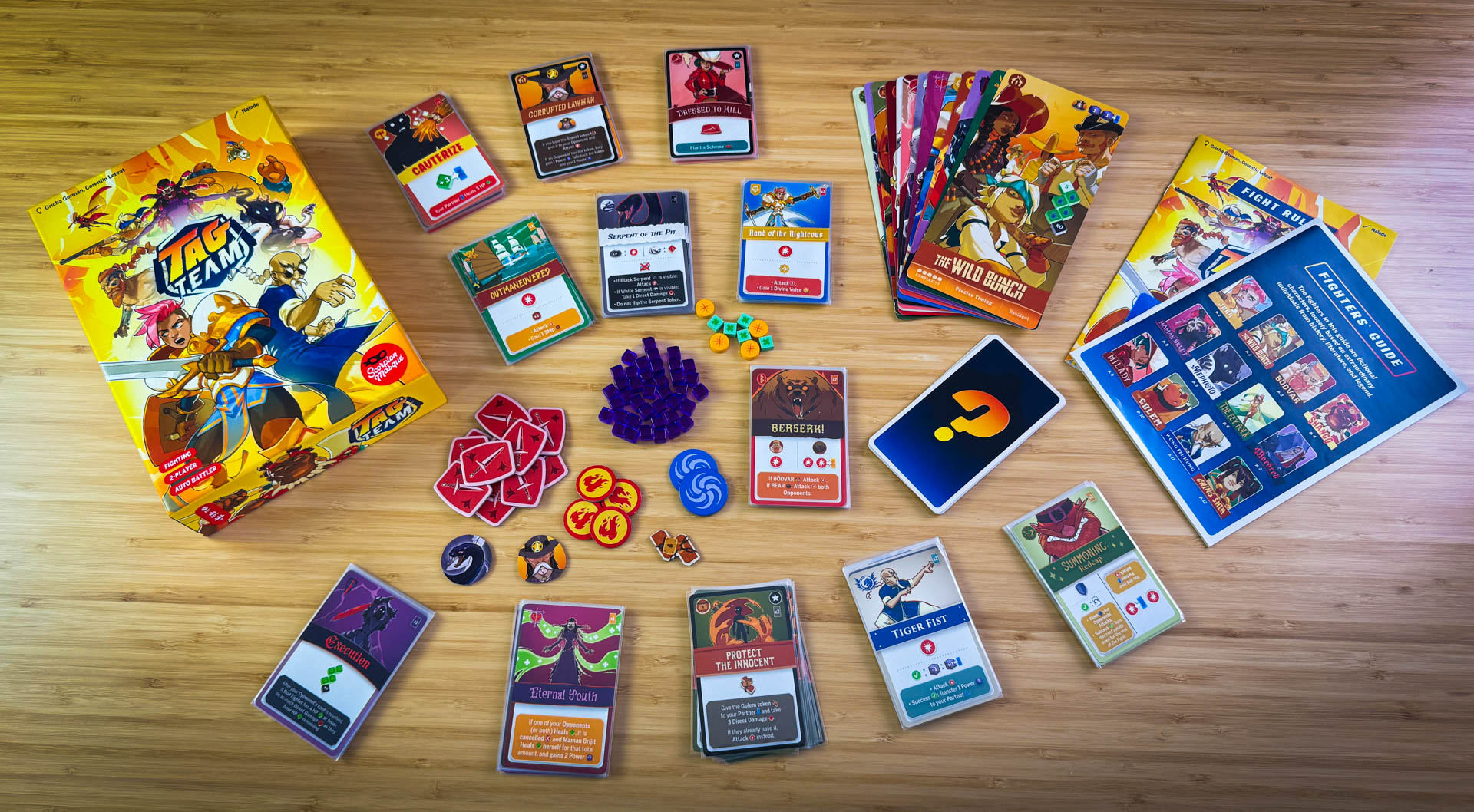
When I saw Tag Team, I was attracted by the bright art, multiple playable characters, and the idea of a good old-fashioned duel with my wife or kids.
That passive-aggressive fight to see who destroys the other family member.
Maybe I need therapy.
But maybe playing games like this is my therapy.
GAME OVERVIEW
Tag Team is a lightning-fast fighting game for two players with 12 asymmetric characters in the box.
It plays in just 15 minutes.
Each player takes two battle-ready characters and sets them up according to their asymmetric abilities. Each character has a complexity level from 1 to 5, making it easy to scale the challenge.
First, you pick your fighters.
Then you set up their sheets.
Then you fight.
GAMEPLAY DEEP DIVE
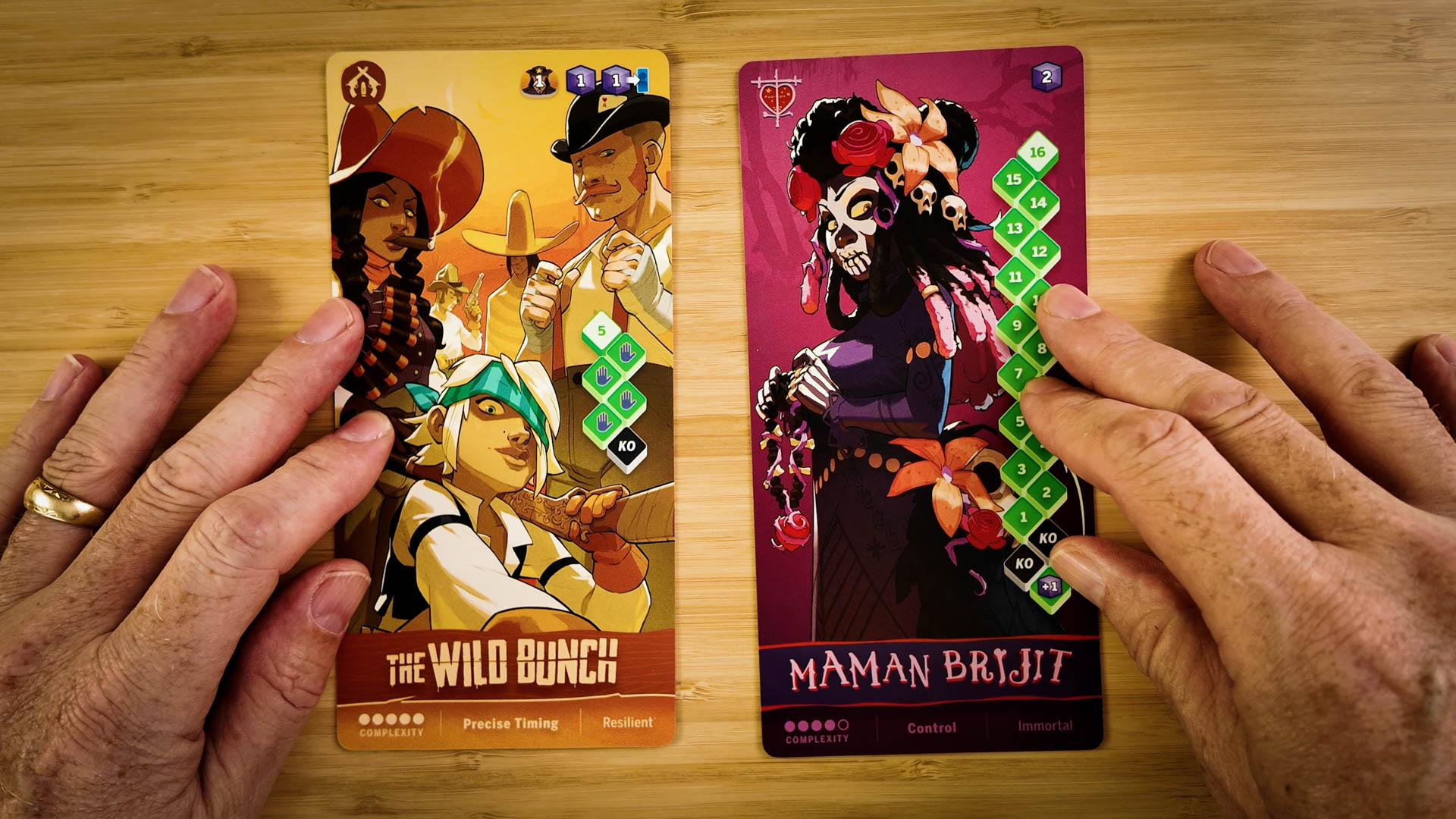
You build power in the form of blue cubes.
You attack with that power to do damage to the other characters involved in the round.
And then you wrap it up by putting a card from your build deck into your fight deck.
It's a deck builder with a fantastic card market mechanic.
At the end of every round, when you've used all the cards in your fight deck, you draw three cards from the top of the market deck, called your Build Deck.
You each choose one card to add to your fight deck, and put the unchosen cards on the bottom of your build deck.
This makes the end of each round full of strategy and interesting choices. In saying yes to the card you want to add, you're saying no to the other cards and putting them at the bottom of your build deck.
But that's not all.
Because your fight deck never gets shuffled, the order matters.
You must place your newly selected fight card on the top, bottom, or between any two cards in your fight deck.
So you're not only programming your fight deck for combinations and synergies between turns—you're also trying to predict and outmaneuver your opponent with the choice of where to put your new card.
Maybe your opponent's first attack card has a massive attack value. You've been paying attention because you've been getting pummeled at the top of each round.
So maybe you want to put that new block card on top of your deck.
But maybe your opponent expects this.
And so they put their new card secretly on top of their deck to outmaneuver you.
But you're clever enough to know they might do that, so you put your block card second.
But maybe they were clever enough to anticipate that.
Never go in against a Sicilian when death is on the line.
COMPONENTS & SETUP
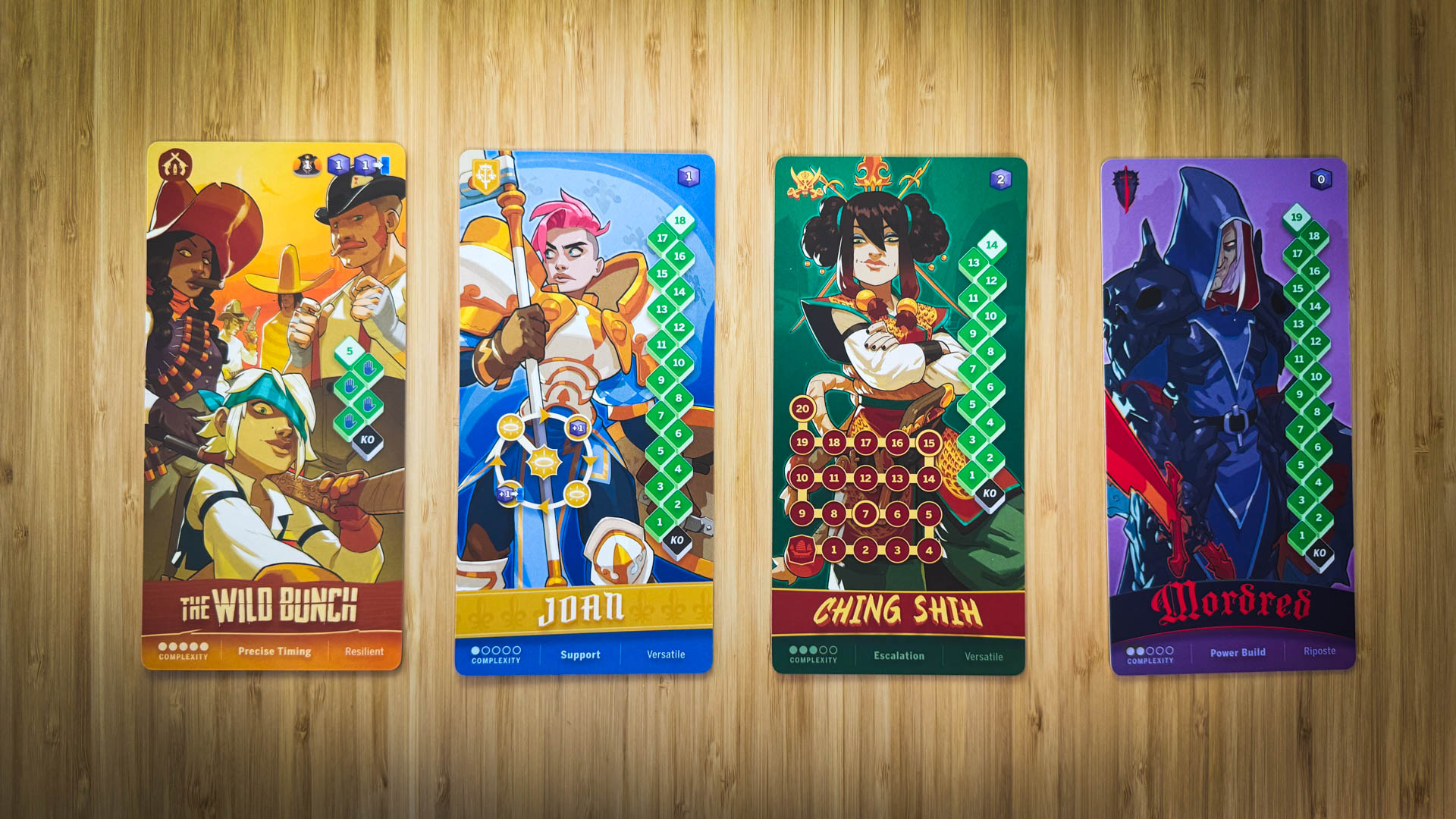
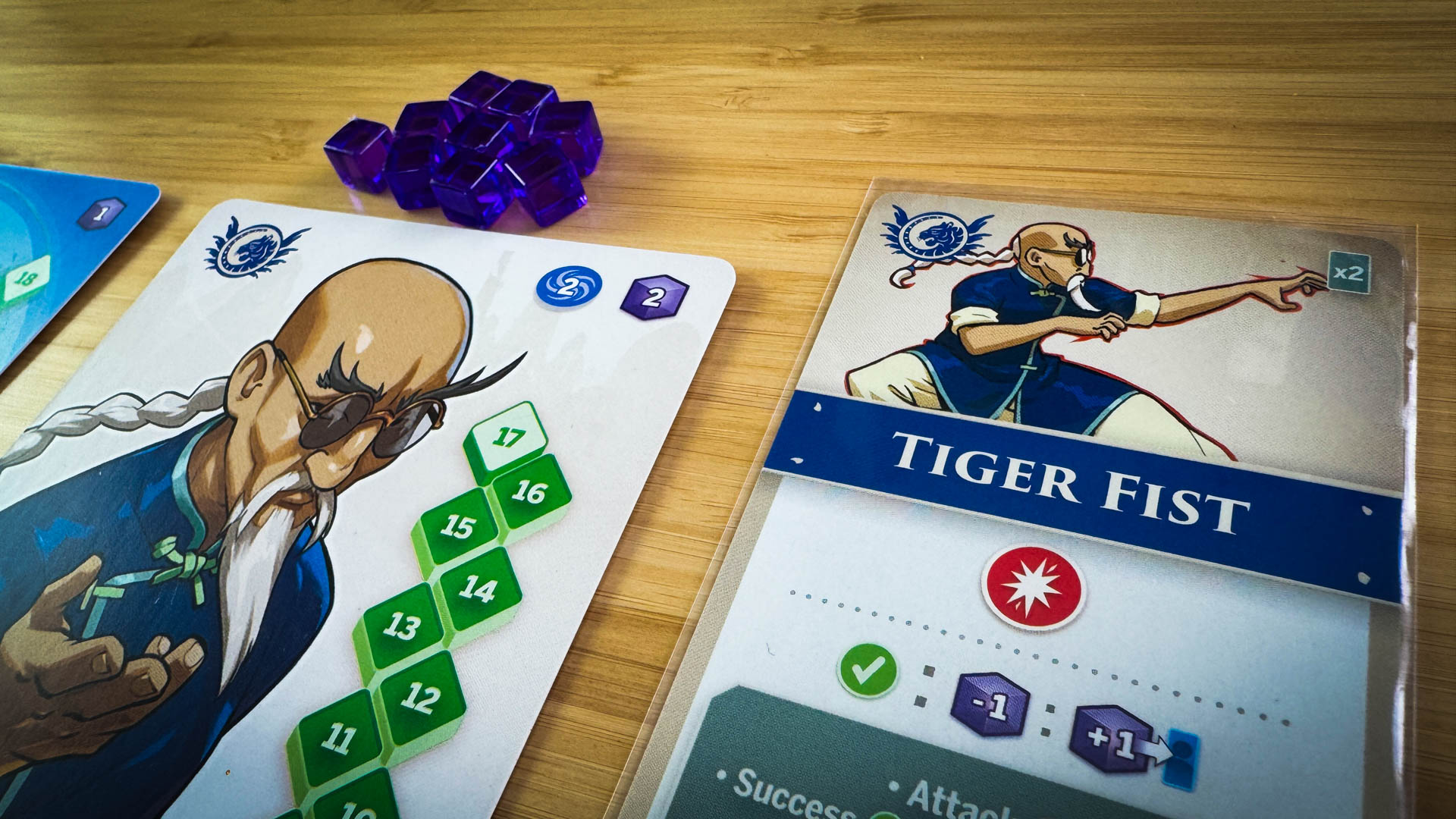
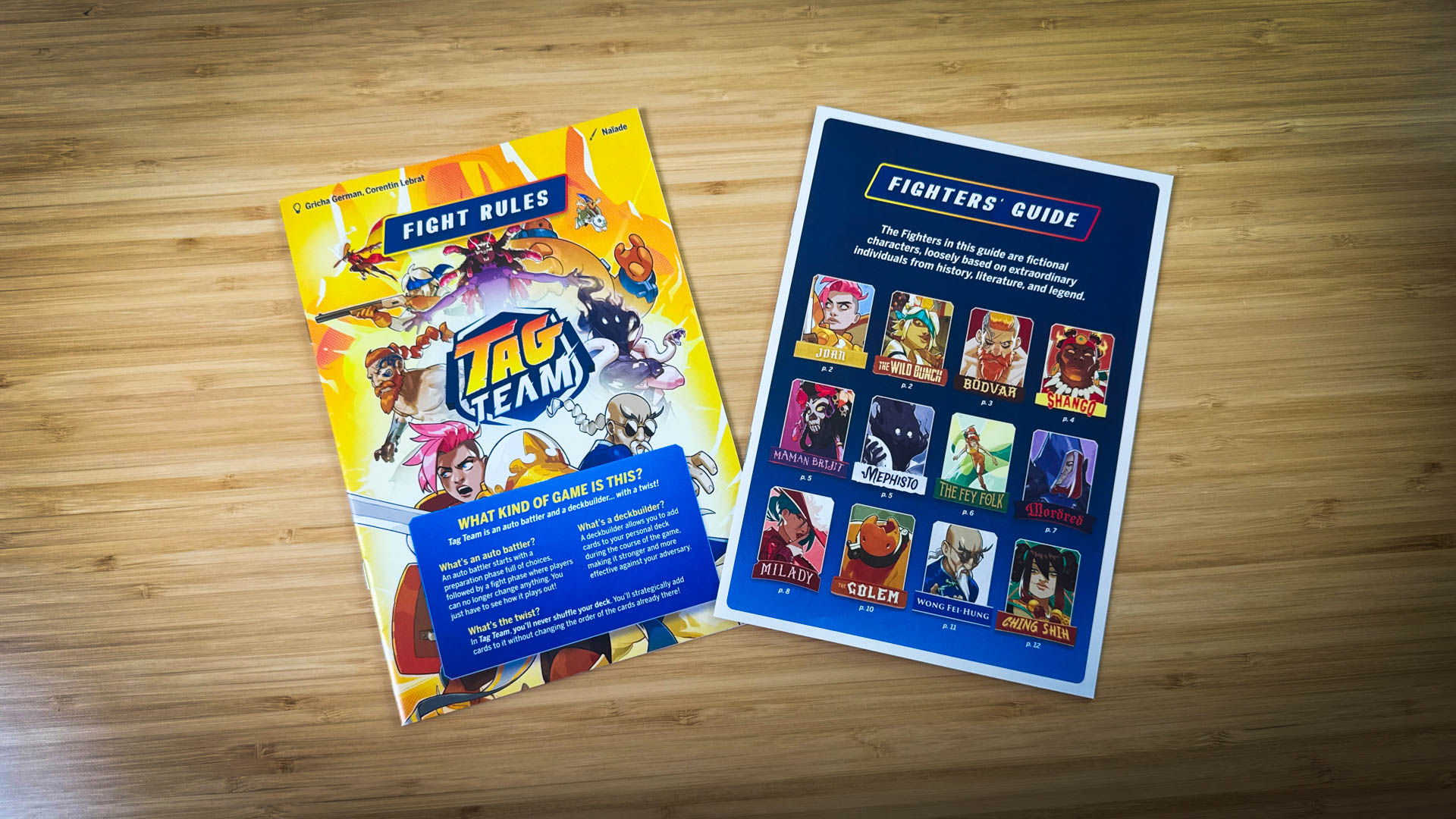
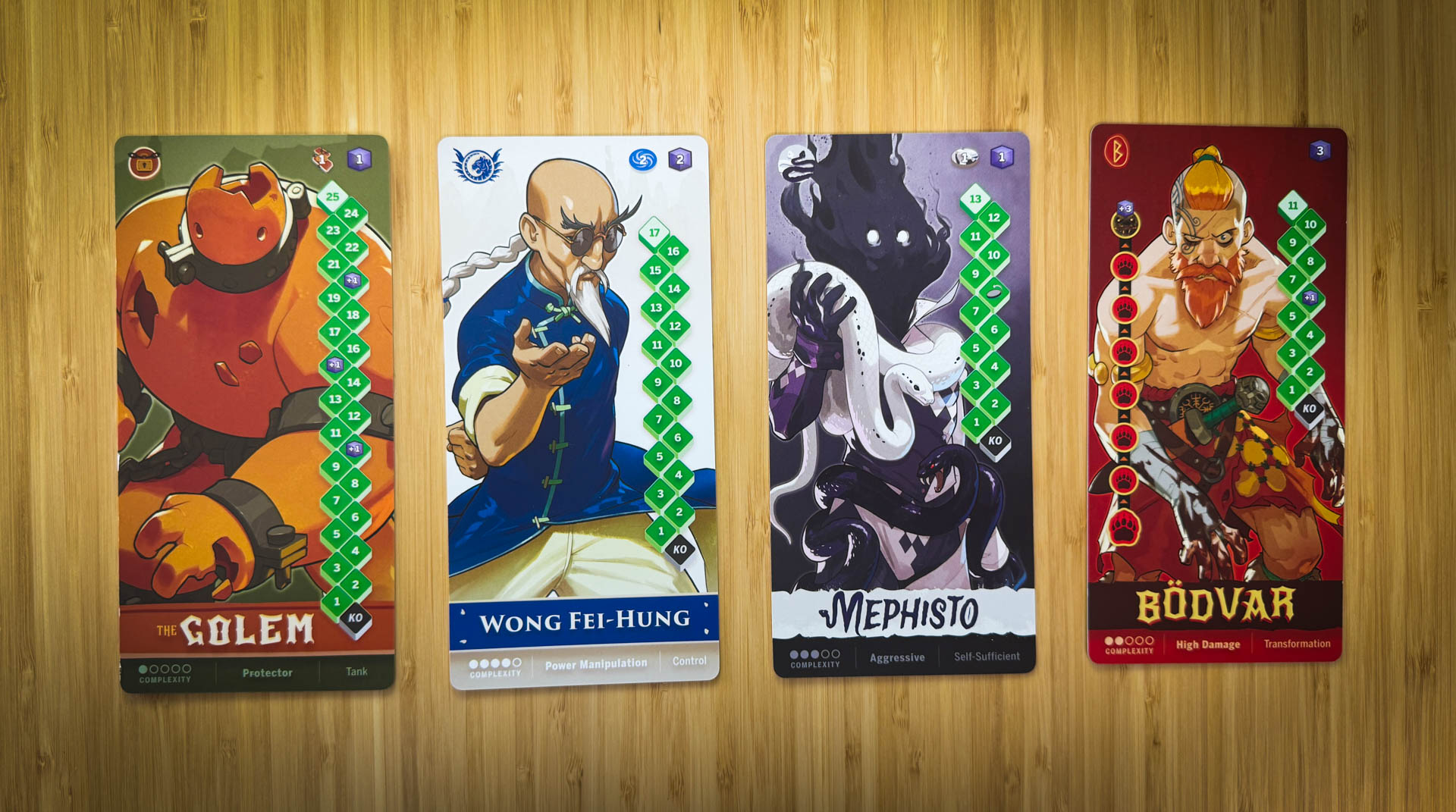
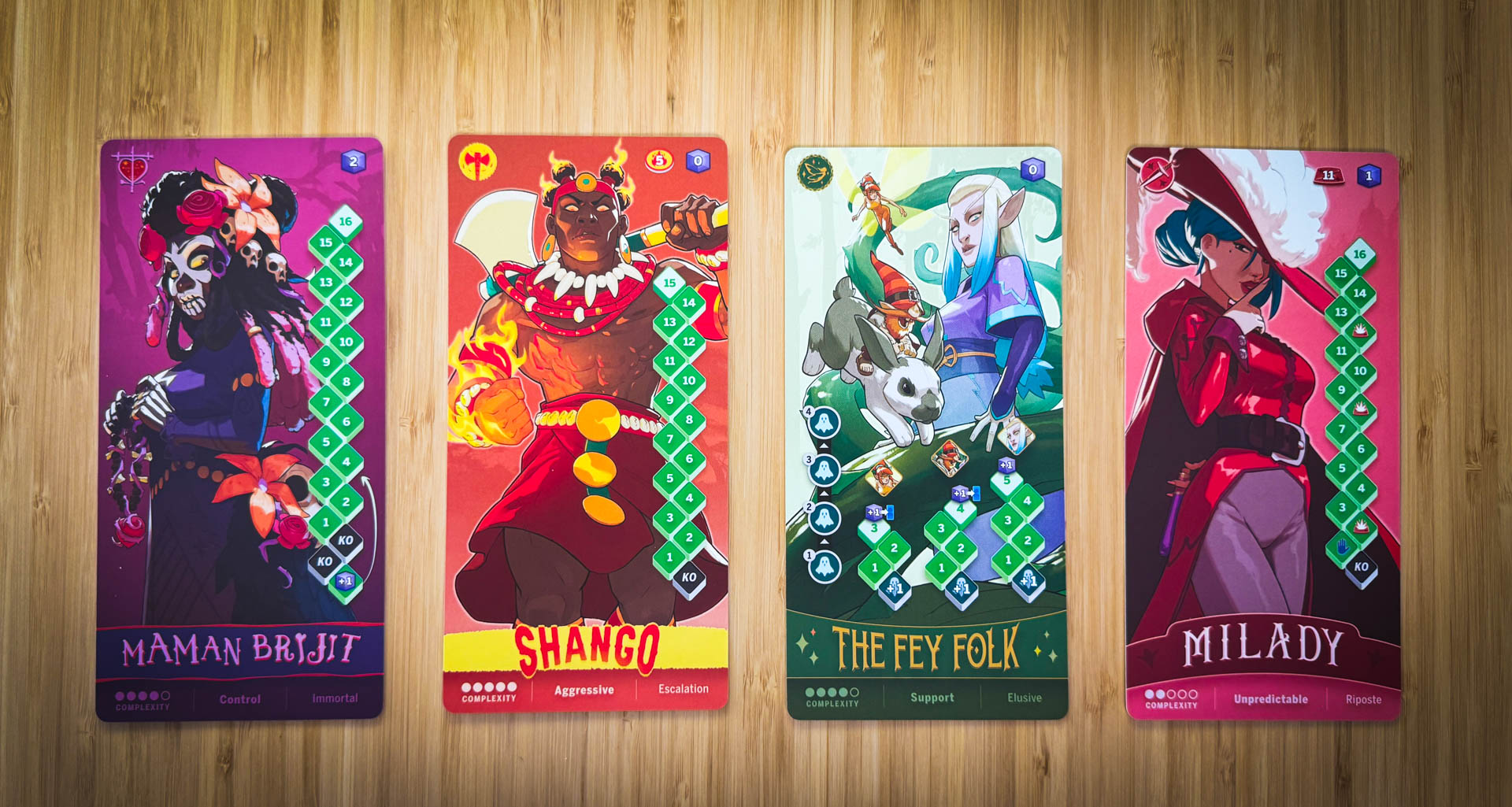
The box includes 12 unique character sheets, each with their own ten-card deck, plus power cubes, damage tokens, a few special tokens for different characters, and a comprehensive rulebook with a separate Fighter's Guide.
The character art brings each fighter's personality to life.
WHAT ELEVATES THIS GAME
There are three mechanics that elevate this game from the "this is fun" territory into the "I want to play it again right now" territory.
First: The tag team system.
You're only activating and targeting the active character each round, determined by the card drawn from your deck. And there are even some characters that let you break this rule.
Second: The building and programming of your fight deck.
It's such a simple mechanic, yet filled with strategic and tactical decisions.
Third: The asymmetric characters.
They augment and add to the system, and the combinations of your fighter and companion leave so much interaction and synergies to be explored and discovered.
Each time I play, I feel like I have a mission to reveal and uncover magical combinations of juicy gameplay.
It feels great.
REPLAYABILITY
With 12 asymmetric characters to choose from in each battle, there's tons of replayability here.
But if you're like me, you'll find some favorite characters to play along with the desire to spice it up every now and then.
The rulebook is clear, and also comes with a separate Fighter's Guide that goes into detail for each character's setup and abilities.
There are also character draft cards, which can be used to mix things up. You can also use them as a simple randomizer to try unlikely combinations.
I like randomizers.
WHO SHOULD PLAY THIS
Tag Team is perfect for players who love quick, strategic duels with some depth.
If you enjoy deck builders but want something faster than your typical engine-building game, Tag Team delivers.
Great for couples, friends who like head-to-head competition, and anyone who appreciates asymmetric gameplay that rewards both planning and adaptation.
MY EXPERIENCE
There's something deeply satisfying about the puzzle of deck programming that engages your brain in the best possible way.
The quick rounds mean you're never stuck in a bad position for long, and the constant tactical decisions keep you present and focused.
There's also something fun about the feeling that your fighter is not fighting alone. They've got a buddy, a fight buddy. They've got backup.
Sometimes you want to fight alone, but sometimes it's good to know someone's got your back.
When I played with my son, as we chose and programmed our cards for the next round, he kept saying, "This is great! This is great!"
And I kept saying, "I told you. I told you so."
My son whipped me in the first game. Or whupped, depending on how you pronounce it.
I didn't know what hit me. But it was over so fast that we switched out some characters and dove in again.
And then something wonderful happened.
I emerged victorious—which is something that happens less often than I'd like. But when it happens, I like it.
FINAL VERDICT
This is a great game.
The system is simple—fight, build, fight and build, fight and build. Yet the combinations of fighters and deck building make it pleasingly strategic and tactical.
Tag Team proves that great things come in small packages, delivering tactical depth and replayability in a tight 15-minute experience that'll have you saying "one more game" way past bedtime.
And that is a game for me.
by Lincoln Hoppe
Original Music by Lincoln Hoppe: The Game Bard
Review Copy Provided by Hachette
Publisher: Scorpion Masqué, Hachette
Designed by: Gricha German, Corentin Lebrat
Art by: Xavier Gueniffey Durin
Board Game Geek Page: Tag Team
My Board Game Geek Page: Lincoln Hoppe

Lincoln Hoppe
Lincoln a professional film & Television actor based in Los Angeles, California.
He has a family with 5 kids, and one of his joys in life is playing games together as a family.
He's on a mission to spread the love and mental health benefits of play and board gaming to the world.

Email Me
lincoln@thegamebard.com
Website
theGameBard.com
Lincoln Hoppe Website
lincolnhoppe.com