Black Forest Board Game Review: When Games Mirror Life Itself

Review by Lincoln Hoppe: The Game Bard

Introduction

Don’t judge me – I’m newer to the hobby and I’ve never played an Uwe Rosenberg game until now. But Black Forest, this very hyped game, made me understand what all the fuss is about.

(Review text here is a quick Summary of the video)

“This little wheel right here takes a great game and makes it legendary – it mirrors the progress of life, advancing our abilities and relationships one turn at a time.”

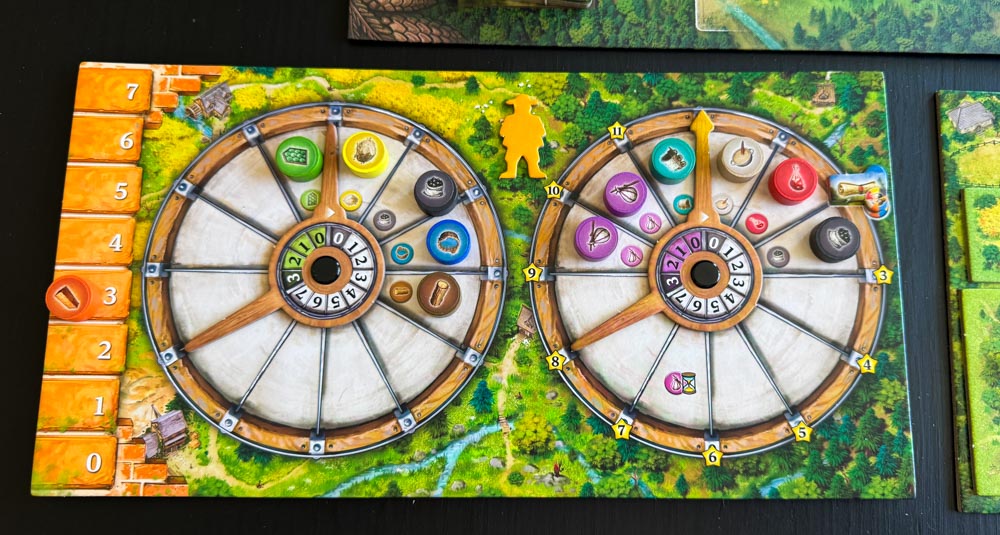
Black Forest board game components showing resource wheels

First Impressions: A Newcomer’s Take on Rosenberg

In Black Forest, you play as glass artisans in the medieval Black Forest of 13th century Germany. This 1-4 player game brings back Uwe Rosenberg’s famous resource wheels from Glass Road (which I’ve never played), but with a refreshing twist on glass making and empire building.
As a heavy euro game, there’s so much going on. You’ve got so many buildings to build and countless ways to grow your glass making operation and production engine. With 40 different buildings offering different benefits, there are countless strategic paths to victory. If you don’t believe me, try counting them.
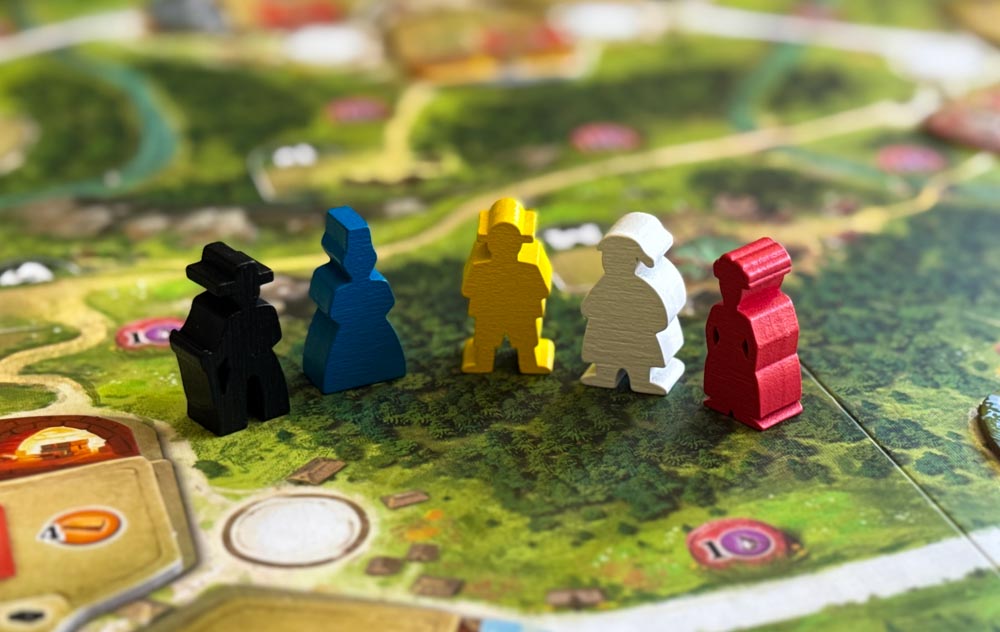
Black Forest board game components showing resource wheels, wooden meeples, and medieval artwork by Uwe Rosenberg

The Resource Wheel That Changes Everything
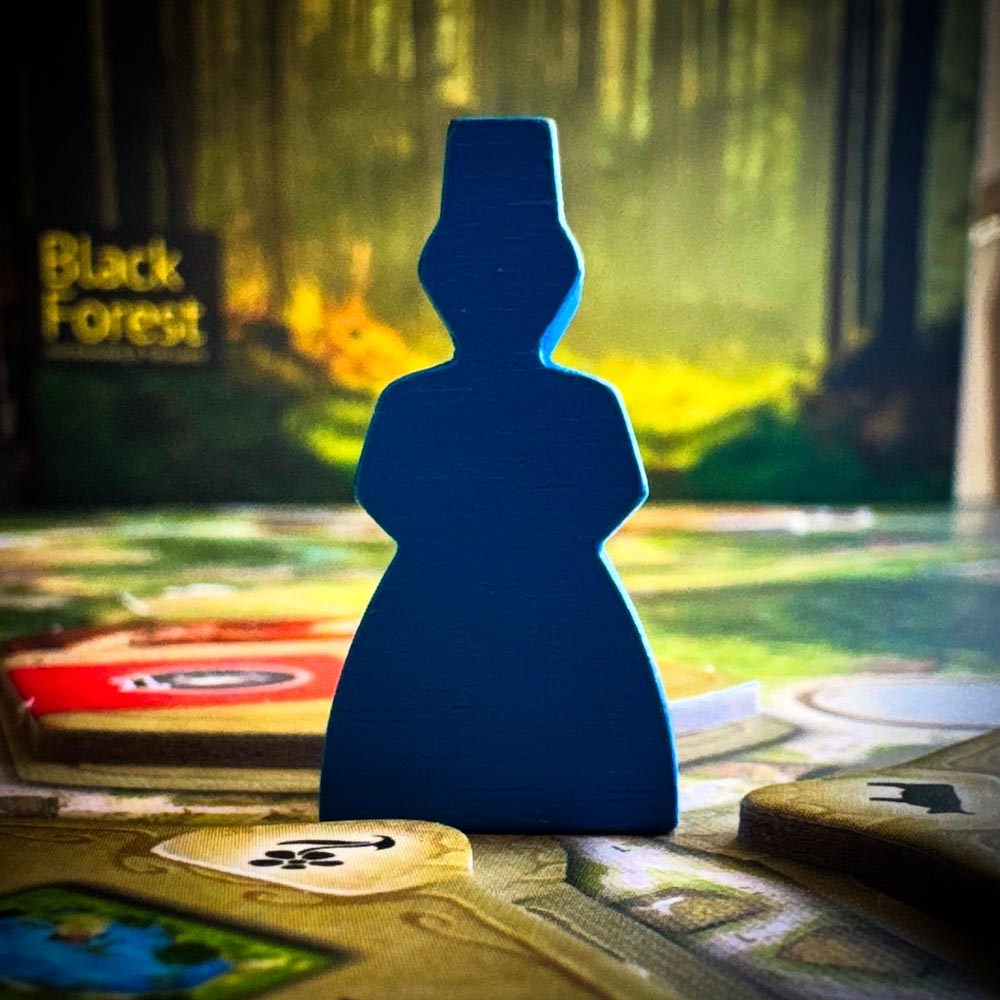
Let’s talk about the wheel – the wheel of life. I mean, the wheel of resources.
This mechanic in Black Forest blew my mind, especially after I looked deeper and saw what it was really doing. It just hid there, all casual, like trying to fly under the radar – like a Lamborghini parked at a 7-Eleven, trying to blend in with the Honda Civics. (No offense if you drive a Honda Civic – it’s just that Civics and Lamborghinis are very different.)
Each player has two resource wheels on their player board, and the resource management system is off the charts. This little wheel takes a great game and makes it legendary. The glass production happens automatically when you have enough resources. You’re not just turning a wheel – when you turn the wheel by adding resources, you’re producing glass.
An action that could feel passive if you’re not paying attention becomes the heart of everything. Everything you’re doing leads up to this advancement of the wheel, producing your glass and moving your game forward. It’s so smart and satisfying.
Rumian Board Game Player Reference board

Gameplay Flow and Strategic Depth

The game flows beautifully as you move from village to village, recruit tradespeople, build structures, and manage your growing glassmaking empire. On your turn, you can move your amazing wooden meeples around the Black Forest by spending a resource from your wheel, then take two tradesperson actions or complete a job.
Each turn offers meaningful decisions about resource allocation, building placement, and timing – precious timing of your glass production. The variety of buildings means every game feels different, with multiple viable strategies emerging from the same starting position. You could never play every combination unless you played this game thousands of times or more.

Components and Medieval Atmosphere

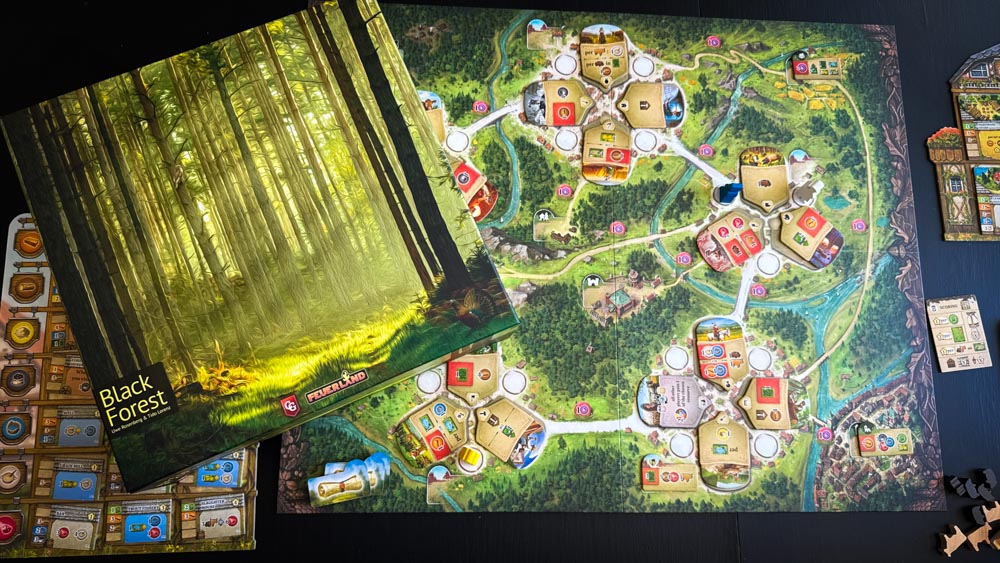
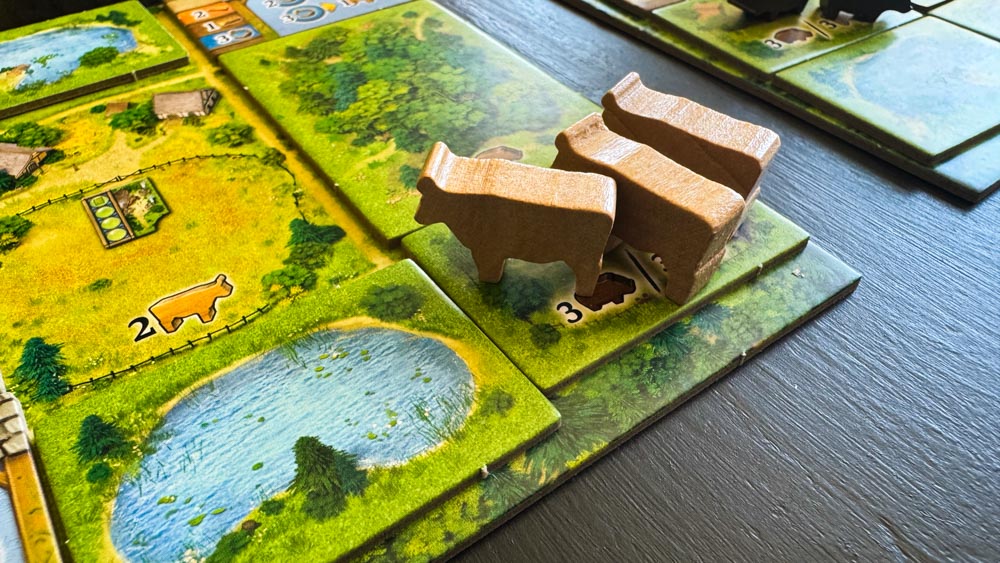
The components in Black Forest are fantastic – artwork that captures the medieval forest setting perfectly. The meeples, cows, anchors, and those resource wheels feel so satisfying to turn. But more important than that, this game offers something deep and therapeutic in a world that often demands instant gratification.
Black Forest celebrates the quiet satisfaction of steady progress.
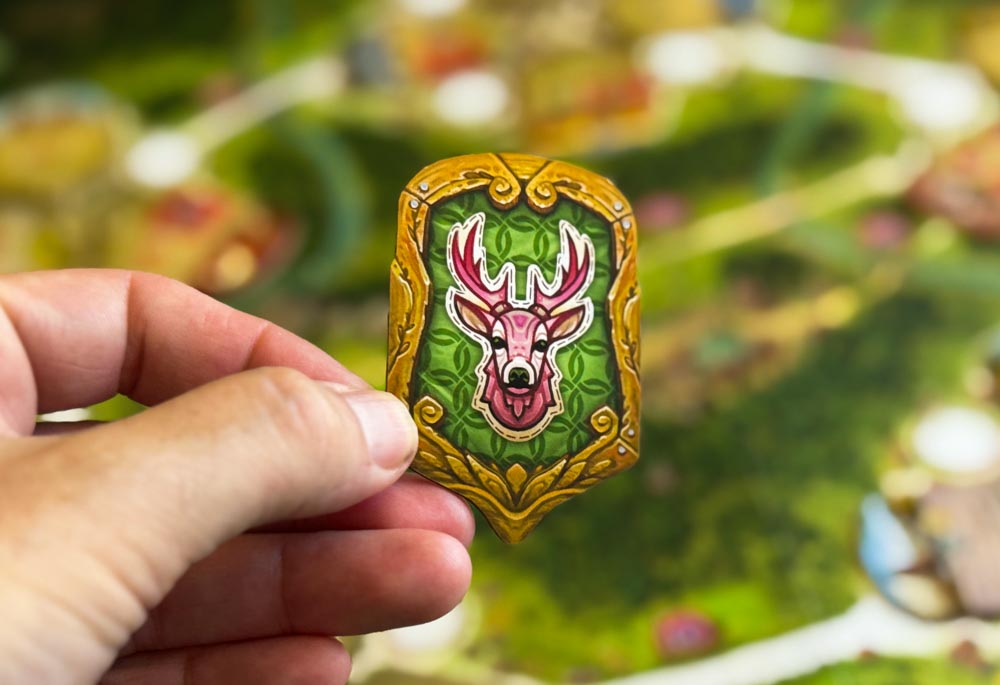
Rumian board game component the Wolf

The Deeper Meaning: Life Reflected in Glass
Now, this might sound crazy, but stay with me.
Life is sprinkled with cornerstone moments – graduation, the birth of a child, a wedding day, a major promotion, or some heroic achievement. But there are so many wonderful things that happen in life much more often without ceremony. Watching a sunset. Hearing a beautiful piece of music. A smile from a loved one, or a note from a friend that simply says, “I care.”
These things happen with such frequency and just become part of us. We interact and progress in little bits and hardly notice. Some of these simple but arguably beautiful moments become commonplace.
Don’t laugh, but Uwe Rosenberg’s resource wheel in Black Forest understands exactly what I’m getting at. It’s there in the background, sculpted into the game, slowly advancing and unfolding your artisan’s life story based on small bits of progress that could otherwise go unnoticed.
As the wheel advances, it gives you the ability to move and explore more and build more, while at the same time helping you seemingly passively reach your goal in making glass and working toward victory.
Making glass has never been my thing in real life – I’m an actor who works in film and TV. But every little thing I do preparing for auditions, practicing my craft, studying lines, playing games with my wife and kids moves my wheel to the next level without ceremony, without praise. I simply advance in my abilities and goals and relationships a little turn at a time.
If you indulge me and think about it seriously, I think you’ll agree – there’s true magic in that simplicity.
Black Forest board game components showing resource wheels, wooden meeples, and medieval artwork by Uwe Rosenberg

Who Should Play Black Forest

Back to Black Forest: if you enjoy heavy euros with meaningful decisions and don’t mind a learning curve, Black Forest delivers and then some. It’s perfect for players who appreciate games that reward patience, planning, and the challenge of deliciously crunchy gameplay.
However, if you prefer lighter, faster games or get overwhelmed by multiple strategic paths, this might not be the game for you.

Final Verdict: Mechanically Brilliant, Emotionally Resonant

For me, this is Uwe Rosenberg at his finest (even though I haven’t played any of his other games – please mock me in the comments or suggest his next game I should play).
Black Forest is a game that’s both mechanically brilliant and, if you seek it, emotionally resonant. There are lots of choices, opportunities, and strategies. But this wheel isn’t just a cool mechanic for me – it’s full of meaning because it mirrors the progress of life.
Some people play games to forget about life, but for me, games bring life. They can mirror in gameplay the choices of how I live my life. Maybe I’m being silly, but it doesn’t feel that way to me. I connected with Black Forest. Maybe I was looking for that, but either way I found it.
I found a reflection of life in this game, and that isn’t something I want to forget. Because when you have busy days and life trudges on, there are special games that reach out to us and remind us of the simple beauty of what it means to be alive.
What games have grabbed you the way Black Forest grabbed me?


Video Review Link 

by Lincoln Hoppe


Original Music by Lincoln Hoppe: The Game Bard


My copy of Black Forest was damaged and traded for another game from the US Publisher Capstone Games.


Publisher: , Capstone Games

Designed by: , 

Art by: Lukas Siegmon

Board Game Geek Page: Black Forest

My Board Game Geek Page: Lincoln Hoppe

 

Lincoln Hoppe

Lincoln a professional film & Television actor based in Los Angeles, California.

He has a family with 5 kids, and one of his joys in life is playing games together as a family.

He's on a mission to spread the love and mental health benefits of play and board gaming to the world.

Email Me

lincoln@thegamebard.com

Website

theGameBard.com

The Game Bard Socials

Lincoln Hoppe Website

lincolnhoppe.com

Lincoln Hoppe Socials